Owner notebook
Senior dog pacing at night? What to note for your vet
Record the time, repeated route, duration and what happened before and after. A brief clip can help explain a new nighttime change.
In this piece
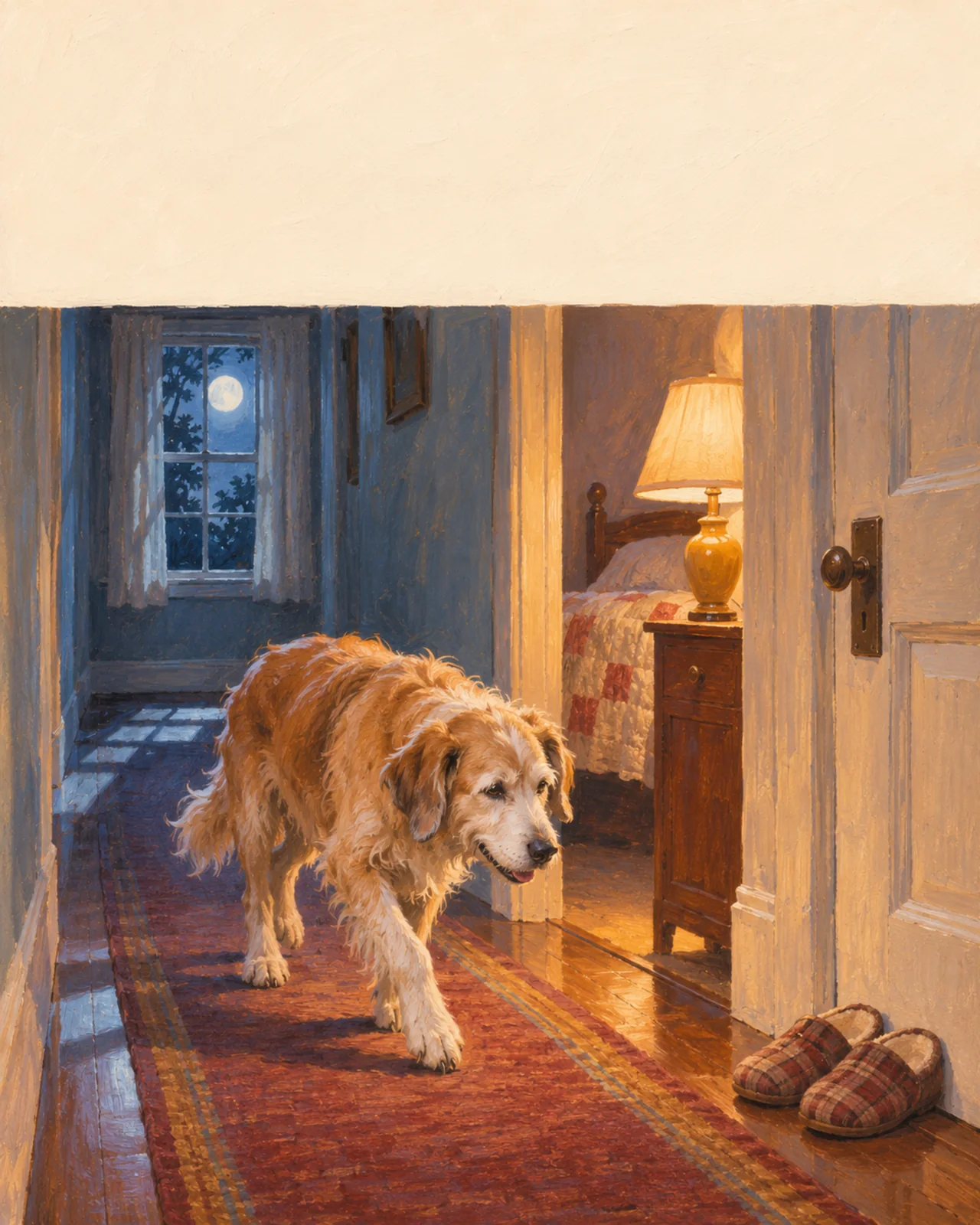
If your older dog is pacing while the rest of the house is trying to sleep, you want to know what will help tonight. Keep a clear, familiar route to their resting place and toilet access, and look for signs they are uncomfortable. New or repeated pacing needs a vet conversation; a nighttime lap alone doesn't tell you the cause.
One Chihuahua was making laps at ten, then again at six
The owner filmed the same repeated route around the room at about ten at night and six the next morning. They said their dog still knew where food and water were. The timing and repetition were what stood out. Read the Chihuahua owner's post.
That detail is useful because "restless" can mean several different things. A trip to the outside door, repeated circling and an inability to lie comfortably are not the same report.
Does nighttime pacing mean dementia?
It can be part of the sleep-wake changes discussed in Cornell's senior-dog dementia guide, but it does not establish that diagnosis. Pain and other health problems also need consideration. Tell the clinic whether the change was sudden and what else is different, including appetite, drinking, toileting or daytime behavior.
What to do with the next restless spell
First attend to your dog. See whether they need their usual toilet opportunity and whether they can settle in their normal safe sleeping area. Avoid turning the house into an obstacle course with a new arrangement in the middle of the night.
Then make one brief note: the time, what they kept doing and what happened afterward. A short clip, when safe to take, can show the route better than a long description. You do not need to stay up building a spreadsheet.
When to call rather than keep recording
If the pacing is new, persists or keeps returning, contact your vet. Seek prompt help if your dog seems severely distressed. A calmer morning doesn't erase a repeated nighttime problem.
I would bring the clip and the ordinary details first. For the Chihuahua's owner, the repeated lap at two particular hours was already a much clearer account than "she had a bad night."
Sources
- Read the Chihuahua owner's postreddit.com
- Cornell's senior-dog dementia guidevet.cornell.edu